Kuala Lumpur, Malaysia — 30 MARCH 2026
Scicom AI Research Team Headlines Developer Kaki x NVIDIA GTC Watch Party 2026, Unveiling State-of-the-Art Open-Source AI Achievements
Scicom demonstrates breakthrough performance in multilingual TTS, optimized inference, and enterprise AI infrastructure — outperforming GPT-4o on speech benchmarks while contributing over 141,000 hours of open-source training data
The Lead
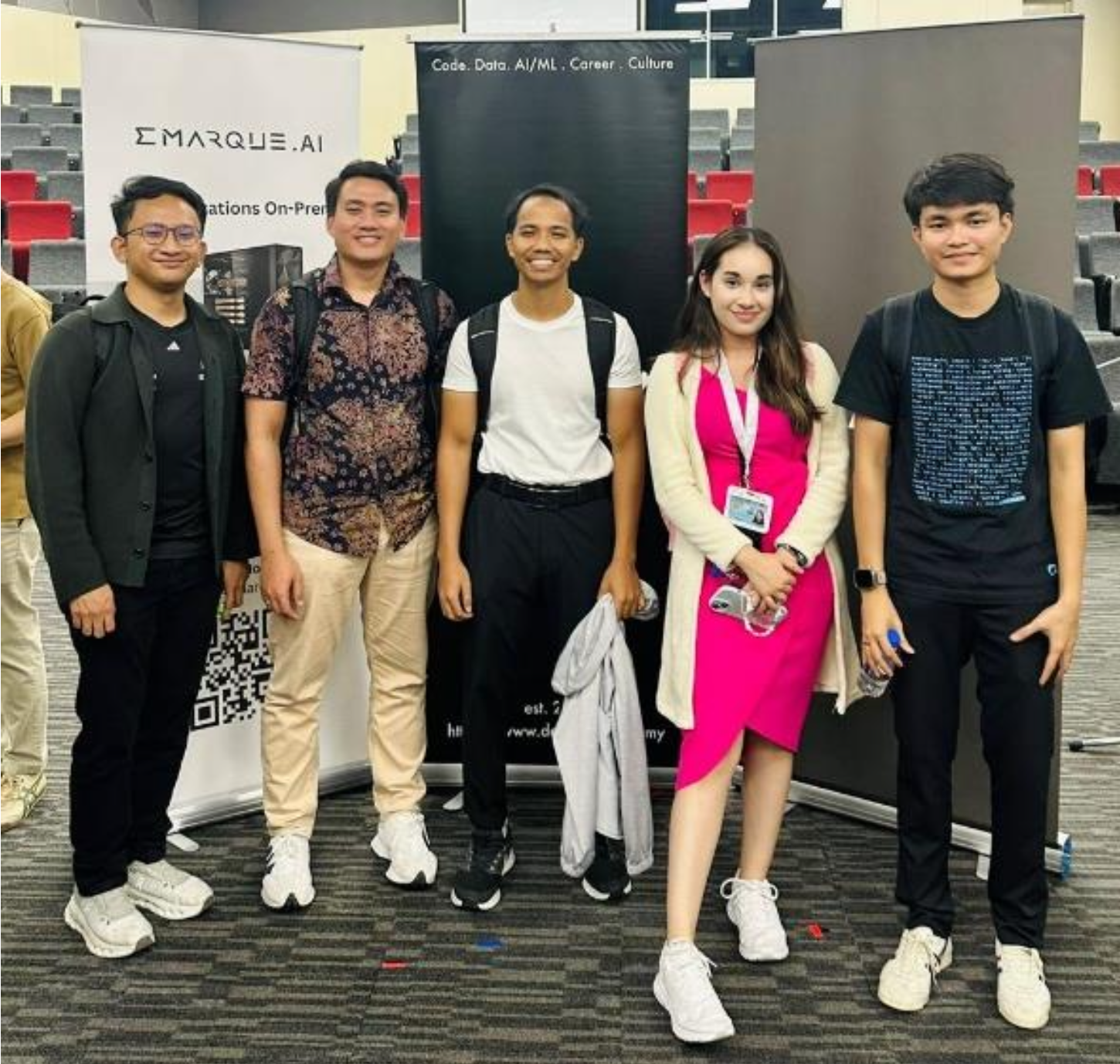
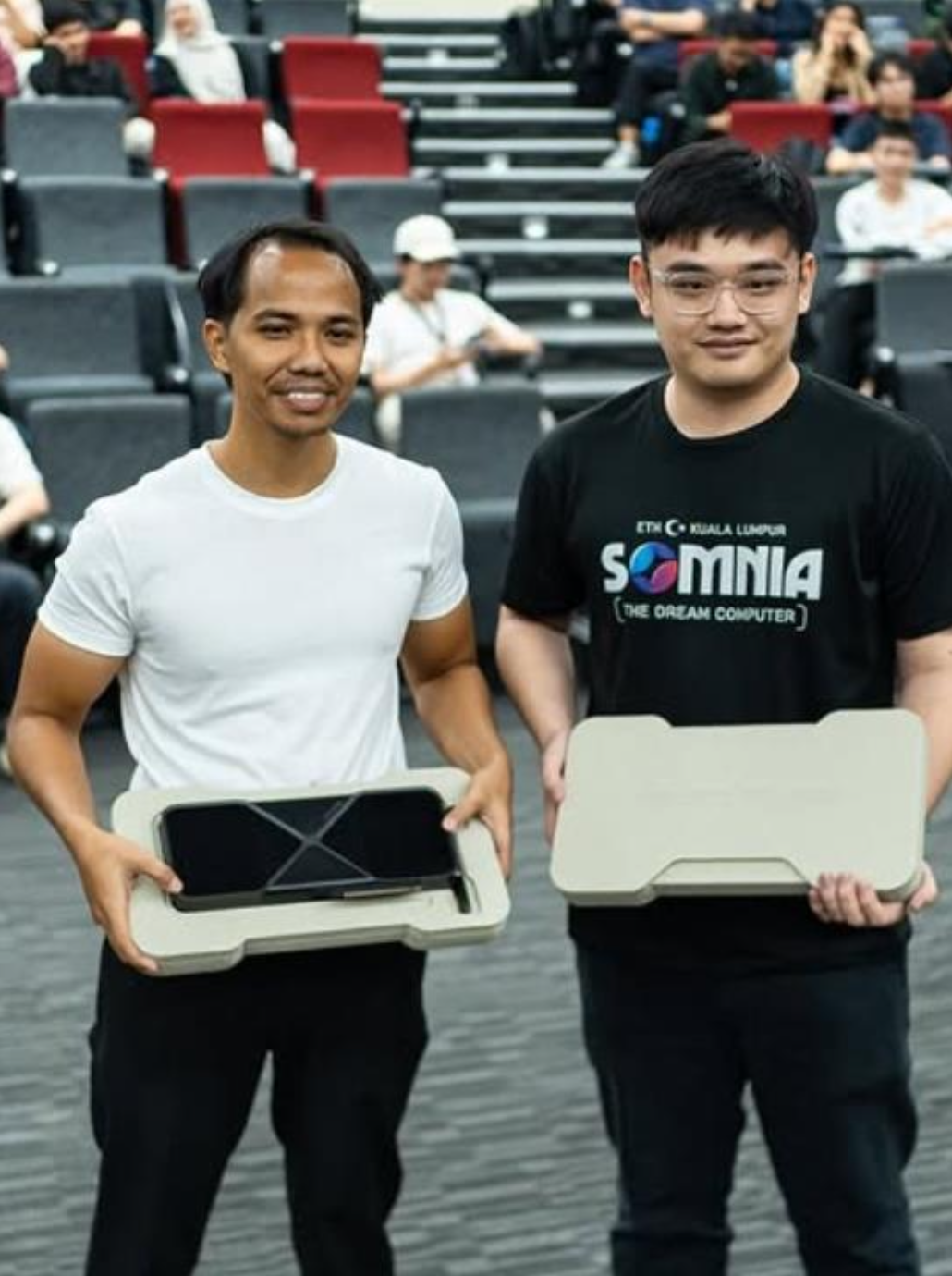
Scicom (MSC) Berhad's AI Enterprise Solutions team took center stage at the Developer Kaki x NVIDIA GTC Watch Party 2026, held on March 30, 2026, at Taylor's University, Bandar Sunway. Before an audience of over 300 AI enthusiasts, developers, and tech professionals, Scicom's researchers unveiled a comprehensive portfolio of open-source AI achievements spanning multilingual speech synthesis, high-performance inference systems, and distributed training infrastructure.
The workshop series featured three distinguished speakers from Scicom's AI Research division: Husein Zolkepli, VP of AI Research Engineering & Governance; Ariff Nazhan, Senior AI Infrastructure Engineer; and Ariff Saad, AI Infrastructure Engineer, recognized pioneers whose work on MalaysianNLP continues to shape Southeast Asia's AI landscape.
The Strategy
Scicom's participation at the GTC Watch Party demonstrates the company's dual commitment to advancing Malaysia's AI ecosystem through open-source collaboration while building enterprise-grade AI capabilities. By publicly releasing research, datasets, and inference tools, Scicom is positioning itself as a key contributor to the global open-source AI movement while developing proprietary expertise in production AI deployment.
The timing is strategic. As the industry undergoes a generational hardware transition from Hopper to Blackwell architectures — with Blackwell delivering up to 2.5× faster training and significantly improved cost-per-token economics — organizations must understand both the infrastructure fundamentals and the economic implications. Scicom's workshops addressed both: the technical depth required to optimize AI systems, and the business case for doing so effectively.
Executive Voice
“We've released over 141,000 hours of multilingual audio data across more than 150 languages, developed speech models that outperform GPT-4o-audio-preview on key benchmarks, and built inference systems achieving 3× latency improvements. This isn't just research, it's production-ready AI that serves Malaysia's multilingual reality.”
“Our EcahLang inference engine demonstrates that you don't need massive infrastructure to achieve state-of-the-art performance. With techniques like continuous batching, paged KV cache, and CUDA Graphs, we've achieved 3× improvement in inter-token latency and reduced time-to-first token by over 20%. These optimizations translate directly to lower cost-per-token and better user experience — the economics of AI deployment depend on getting these fundamentals right.”
“Understanding distributed training infrastructure, from NVLink's terabytes-per-second bandwidth within nodes to NCCL's hierarchical all-reduce across clusters — is essential for anyone serious about scaling AI. NCCL isn't just faster than CPU-based alternatives; it's what makes multi-GPU training economically viable. Without GPU-aware collective communications, organizations would need orders of magnitude more hardware to achieve the same results — that's the difference between a viable AI project and an abandoned one.”
The event showcased live demonstrations on NVIDIA DGX Spark systems and featured Scicom's production infrastructure benchmarks on NVIDIA H100 multi-node configurations, with analysis of token throughput versus end-to-end latency trade-offs.
Key Highlights
State-of-the-Art Multilingual TTS & Speech Research
- Published research on improved X-Codec-2.0 speech tokenizer achieving enhanced latent rate and sampling quality across over 100 languages.
- Released over 141,000 hours of multilingual audio training data spanning more than 150 languages.
- Developed Multilingual-Expressive-TTS models achieving highest MOS scores in their parameter class.
- Speech LLM outperformed GPT-4o-audio-preview on Language, STEM, and general benchmarks using a compact 7B model with audio encoder.
- Malaysian Chinese and Tamil voice conversion datasets with thousands of hours and over one million audio samples.
EcahLang: High-Performance Open-Source Inference Engine
- 3× improvement in inter-token latency using CUDA Graphs, enabling real-time AI applications at scale.
- Chunked prefill reduced time-to-first-token by over 20% under high concurrency, directly improving user experience.
- Paged KV Cache achieving 3–5× improved memory utilization, reducing infrastructure costs proportionally.
- Built on FlashInfer with continuous batching, torch.compile optimization, and CUDA stream overlap scheduling.
- Open-sourced for the community to build upon and deploy.
Distributed Training & Infrastructure Expertise
- Live benchmarks on multi-node H100 SXM5 configurations via RunPod Instant Clusters.
- NCCL all_reduce performance analysis demonstrating why GPU-aware collective communications are essential — without NCCL's ability to leverage high-bandwidth interconnects like NVLink and InfiniBand, distributed training would require dramatically more hardware to achieve the same throughput, making large-scale AI economically infeasible.
- Deep dive into 3D parallelism strategies (Data, Tensor, Pipeline) for training large models efficiently.
- NVLink + InfiniBand architecture analysis: understanding the bandwidth hierarchy that determines how parallelism strategies should be designed for cost-effective training.
Malaysian AI Ecosystem Contributions
- Malaysian Reasoning dataset including Tamil and Chinese chain-of-thought data for local language AI development.
- Multi-turn function calling datasets supporting four languages (Malay, English, Tamil, Chinese).
- Malaysian Entity Encoder for PII detection across all Malaysian languages.
- Complete Malaysian LLM benchmark suite for guard railing, prompt injection, and RAG evaluation.
About Scicom (MSC) Berhad
Scicom (MSC) Berhad is a leading global digital transformation solutions provider. Listed on the Main Market of Bursa Malaysia, Scicom specializes in integrated customer lifecycle management, digital government services, and e-commerce solutions. With a footprint spanning multiple continents, Scicom delivers innovative, AI-enhanced services to a diverse portfolio of Fortune 500 companies and government agencies. For further information, visit scicom.com.my.
This press release contains forward-looking statements that involve risks and uncertainties. Actual results may differ materially from those anticipated. Scicom (MSC) Berhad is listed on the Main Market of Bursa Malaysia Securities Berhad.